When a tree has to go
A tree removal is a bigger decision than a prune, and it should be the right one. These are the situations that usually lead to a removal around Scarborough:
- The tree is dead or dying. Salt, drought stress, borer damage or old injuries finally catch up, and the canopy browns off over a season or two.
- The tree has moved. A new lean after a storm, cracked soil on one side of the trunk, or a split opening between two main stems.
- Decay at the base. Fungal fruiting bodies, soft wood, or a hollow at ground level.
- It is too big for the block. A pine planted as a seedling decades ago, now towering over a house or a subdivided lot.
- Building work. A new driveway, pool, granny flat or second dwelling where the tree sits.
If you are unsure, the contractor will say whether pruning would do the job instead. Removal is not the default answer to every tree complaint.
How removals are done near houses
On an open site, a tree can sometimes be felled in one piece. That is rare in Scarborough, where blocks are tight and houses, sheds and fences crowd every side.
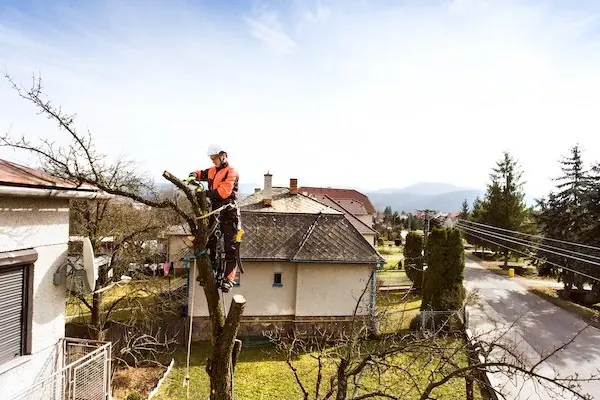
Instead, the tree is usually dismantled from the top down. A climber works up the tree, removes the smaller branches, then cuts the trunk into manageable sections. Heavier pieces are tied off and lowered on ropes through a friction device at the base so they land where the ground crew wants them, not on the roof. The last section of trunk is cut close to ground level.
Where access allows, an elevated work platform or a crane can speed this up. Cranes are especially useful for very large trees overhanging houses, because whole sections can be lifted clear. The quote should say which method is planned.
Coastal trees that are commonly removed
Norfolk Island pines planted in the 1960s and 1970s are now huge, and some sit right beside houses or under power lines.
Cotton palms and date palms grow beyond the reach of normal maintenance, and the heads can be heavy.
Coastal tea tree and old wattles fall over, sprawl into fences, and are often cleared as part of a garden renovation.
Eucalypts that have lost major limbs or have extensive decay are sometimes better removed than repeatedly pruned.
Cape lilac and Brazilian pepper are weedy exotics found in older gardens that owners often choose to replace with something better suited.
Clearing a block for building
We also arrange clearing for small residential sites. Around Scarborough that usually means removing several trees and shrubs, grinding the stumps and taking out large roots before a builder starts. If you are preparing a site for a new home or a second dwelling, mention it when you enquire, as it affects how deep stumps are ground and what equipment is needed. Check your development approval for any trees that must be retained.
Wood, green waste and quarantine rules
Branches are normally chipped on site and the chips removed, or left for your garden if you ask. Logs are cut and taken away. Perth is under a quarantine response to the polyphagous shot-hole borer managed by the Department of Primary Industries and Regional Development (DPIRD), which can limit how wood from some host trees is moved and disposed of. A contractor working locally should know the current rules; ask if you are not sure.
After the tree is gone
Removing a tree changes the garden. You may lose shade and privacy, or open a view to the street. You might want a replacement tree in a more suitable spot, or turf, paving or a garden bed where the stump was. The stump grinding page explains how the ground is prepared, and the coastal tree care guide has suggestions for species that cope with salt and sand.
For planning figures on removals, see the cost guide.