What people in Scarborough usually mean by tree lopping
Around Scarborough, Trigg and Doubleview, "tree lopping" is the everyday name for making a tree smaller. The calls we get tend to fall into a few groups:
- a peppermint or gum spreading over the roof, dropping leaves into the gutters and scraping tiles in the wind
- a tall tree shading solar panels or a north-facing living area
- long limbs reaching over a neighbour's fence, pool or carport
- a tree that looks top-heavy and worries the owner every time a winter front comes through
- a tree that was cut back hard years ago and has regrown as a tangle of upright shoots
All of these are reasonable goals. The difference between a good result and a bad one is in how the cuts are made, so it is worth knowing what to ask for.
Reduction, thinning and lifting
Most lopping work is one of three things, or a mix.
Crown reduction brings the overall height or spread down by shortening the outer limbs back to suitable side branches. The tree keeps its natural outline, just smaller. This is the right answer for trees that are too big for the space but otherwise healthy.
Thinning removes selected branches from inside the canopy so wind passes through rather than pushing against it. On exposed blocks near West Coast Highway, thinning a dense canopy can do more for storm safety than cutting height off.
Lifting removes lower branches to clear a roof, driveway, path or view. It is often all that is needed when the complaint is branches touching the house.
A sensible quote will usually say which of these the contractor is proposing and why.
Why stubs are a problem on the coast
When a limb is cut part-way along its length, with no branch left to take over, the tree reacts by pushing out a cluster of fast new shoots around the wound. Those shoots are attached only to the outer wood, so they break out easily. On the coast they also catch the salt-laden breeze, scorch, and die back, which leads to more dead wood and another round of cutting.
The wound itself is the other issue. Large stub cuts cannot seal over and are an easy entry point for decay. A few years after a heavy topping, the tree can be less safe than it was before anyone touched it. That is why we ask contractors to cut back to sound growth points and to explain their plan before they start.
Species we see most often
WA peppermint is the classic Scarborough garden tree. It grows wide and drooping and responds well to lifting and gentle reduction, but sulks if cut back hard.
Tuart and other eucalypts on the limestone belt can drop limbs in hot, still weather, sometimes without warning. Reducing end weight on long horizontal limbs is often more useful than taking height off.
Norfolk Island pines and palms grow from a single leading point, so they are not lopped in the usual way. They are cleaned up or removed.
Fruit trees, frangipanis and ornamentals in smaller courtyards usually need light, regular shaping rather than an occasional heavy cut.
Access on Scarborough blocks
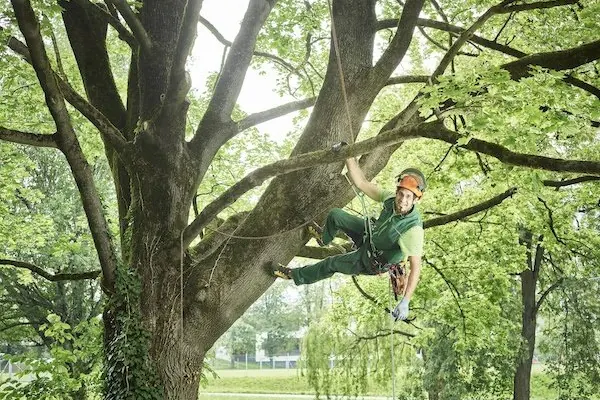
Many homes in the area are on narrow lots, battleaxe blocks behind older houses, or new townhouse sites with little space between buildings. Lopping on these blocks is normally done by climbing, with branches lowered on ropes past roofs, pergolas and pool fences rather than dropped. Where a street frontage allows, an elevated work platform can sometimes speed things up. The contractor will decide based on what they see, which is one reason a phone quote is rarely reliable.
Before work starts
Check whether the tree is on the verge, in which case it belongs to the City of Stirling and should not be touched privately. If your property is heritage-listed, or the tree was kept as a condition of a development approval, check with the City first. If any branches are near the overhead line running to the house, mention it when you enquire, as Western Power sets rules on who may work close to its network.
For planning prices, see the tree lopping cost guide. If the tree is beyond saving, the tree removal page explains how sectional removals are handled near houses.